

Brisbane Surgeons Publish World-First Nomogram for Corneal Ring Segment Treatment of Keratoconus
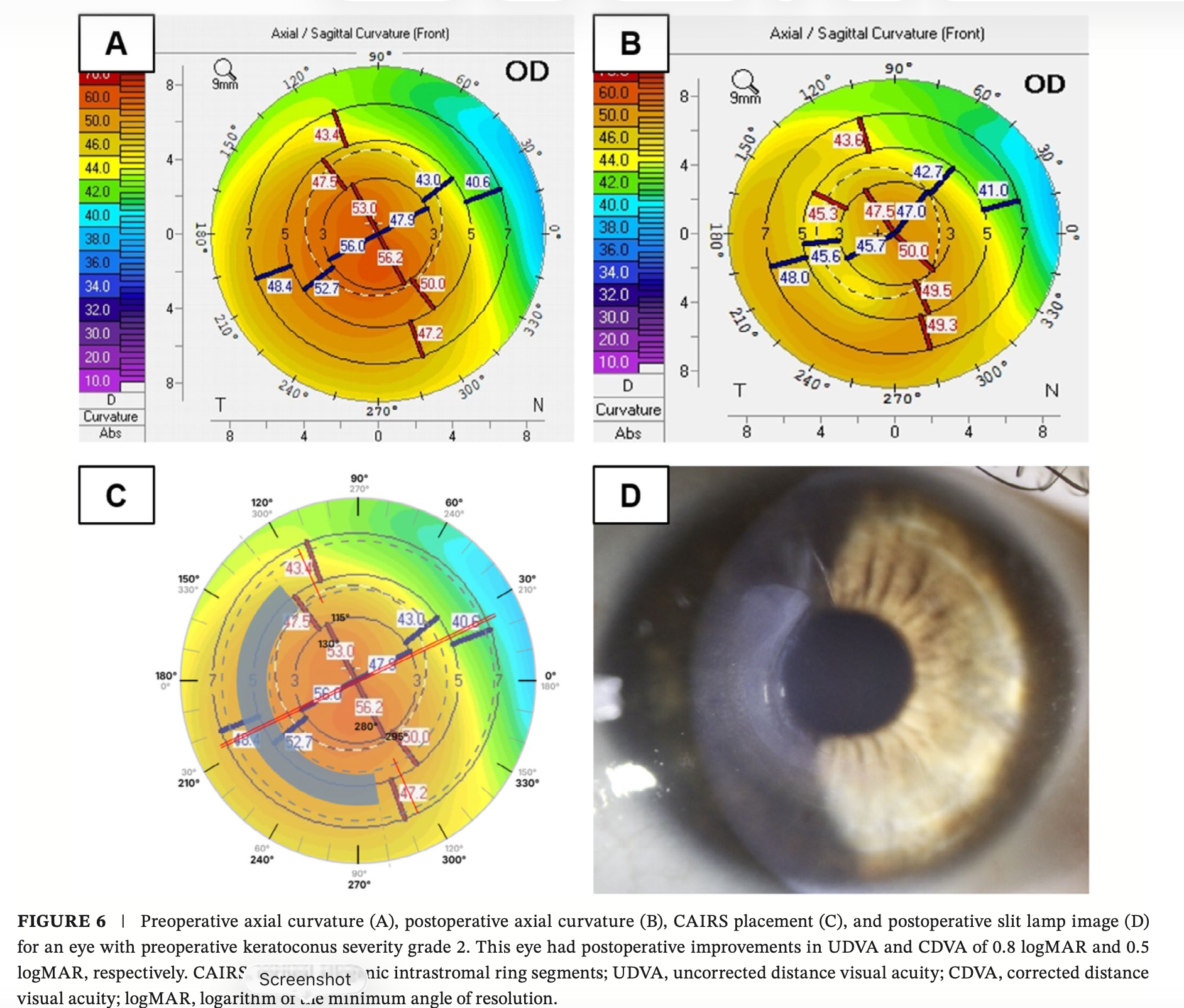
Images of corneal shape pre and post the procedure
Queensland Eye Institute and Focus Vision Clinic Pioneers Describe Novel Surgical Planning Framework for Vision-Threatening Corneal Disease
BRISBANE, QUEENSLAND, AUSTRALIA, April 9, 2026 /EINPresswire.com/ -- Corneal and refractive subspecialists Dr David Gunn and Dr Brendan Cronin of the Queensland Eye Institute and Focus Vision Clinic in Woolloongabba, Brisbane, have published a landmark study introducing the world's first comprehensive nomogram for femtosecond laser-created corneal allogenic intrastromal ring segment (femto-CAIRS) surgery. The research appears in *Clinical & Experimental Ophthalmology* (Wiley, DOI: 10.1111/ceo.70104).
---
About the Condition
Keratoconus is a progressive eye disease in which the cornea gradually thins and bulges into an irregular cone shape, causing severely distorted vision uncorrectable with standard glasses. It affects approximately 1 in 2,000 people worldwide and typically presents in adolescence or early adulthood. Related conditions — pellucid marginal degeneration and post-LASIK ectasia — cause similar corneal distortion and vision loss. Patients with advanced disease have historically faced limited options, often requiring complex corneal transplant surgery.
---
The Brisbane Nomogram
CAIRS involves transplanting a precisely shaped arc of donor corneal tissue into a channel in the patient's own cornea, physically reshaping it to restore regular curvature and improve vision. Unlike synthetic ring implants, allogenic tissue is biocompatible, reversible, and tissue-sparing, with a significantly lower risk of extrusion, migration, or corneal melt.
Until now, no standardised nomogram existed to guide CAIRS customisation across the full spectrum of disease severity. Developed from the team's pioneering CAIRS program — one of the earliest and most active in Australia — the Brisbane nomogram defines four segment sizes (small, medium, large, and extra-large), with corresponding width, thickness, arc length, and implantation depth parameters selected according to each patient's individual corneal topography.
"What makes this nomogram genuinely new is that it spans mild, moderate, and severe disease," said Dr Gunn. "Previous approaches were largely developed for advanced keratoconus. Ours allows us to treat the full spectrum, including patients with early-stage disease who have traditionally been told to wait and watch."
---
Study Results
The study analysed outcomes in 85 eyes from 75 patients across all keratoconus severity grades, with a mean follow-up of 7.5 months:
- Uncorrected vision improved by an average of **4 Snellen lines**, with 43.7% of eyes gaining 5 or more lines
- Best-corrected vision improved by an average of **2 lines**, with gains of up to 11 lines in individual cases
- Corneal curvature was significantly reduced across all key topographic metrics
- Higher-order aberrations — optical distortions causing halos, ghosting, and glare — were significantly reduced
- **No significant complications occurred** in any patient, with no cases of corneal melt or segment extrusion
- Simultaneous corneal collagen cross-linking (CXL) produced greater corneal flattening than CAIRS alone
The femtosecond laser — the same precision technology used in LASIK surgery — enables exact customisation of each segment's width, thickness, and curvature from donor tissue, delivering a level of precision not achievable with manual techniques.
"The femtosecond laser lets us manufacture each segment to exact specifications for each patient," said Dr Cronin. "Combined with the Brisbane nomogram, this gives us a reproducible, tailored solution — much like modern cataract surgery uses precisely calculated lens implants rather than one-size-fits-all devices."
---
A Reversible, Tissue-Sparing Alternative
A key advantage of CAIRS over competing treatments is reversibility and corneal tissue preservation. Unlike topography-guided laser treatments, which permanently ablate corneal tissue in eyes that may already be dangerously thin, CAIRS adds donor tissue without removing any of the patient's own cornea. Implants can be removed if required, making it a particularly attractive option for younger patients and those ineligible for laser-based therapies.
"For patients who can't tolerate contact lenses and aren't ready for corneal transplantation, CAIRS is an exciting middle ground," said Dr Gunn. "It's reversible, biologically compatible, and our results show it delivers meaningful, real-world improvements in vision."
---
About the Researchers
Dr David Gunn and Dr Brendan Cronin are corneal and refractive subspecialists and co-founders of Focus Vision Clinic within the Queensland Eye Institute, Woolloongabba, Brisbane. They introduced CAIRS surgery at their centre in 2021 and have since built one of the largest femto-CAIRS cohorts in the Southern Hemisphere. Both surgeons are internationally active in corneal research, with publications in leading peer-reviewed journals and ongoing clinical trial programs.
The study was approved by the Royal Australian and New Zealand College of Ophthalmologists Human Research Ethics Committee (HREC Reference: 173.24) and conducted in accordance with the Declaration of Helsinki.
---
Publication Details
**Gunn DJ, Cox RA, Cronin BG.** Femtosecond Laser Created Corneal Allogenic Intrastromal Ring Segments for Keratoconus. *Clinical & Experimental Ophthalmology.* 2026; 0:1–14. DOI: 10.1111/ceo.70104. Open access.
Dr Brendan Cronin
Focus Vision
+ +61402124524
email us here
Visit us on social media:
LinkedIn
Instagram
Facebook
YouTube
Legal Disclaimer:
EIN Presswire provides this news content "as is" without warranty of any kind. We do not accept any responsibility or liability for the accuracy, content, images, videos, licenses, completeness, legality, or reliability of the information contained in this article. If you have any complaints or copyright issues related to this article, kindly contact the author above.
