

Quantifying the Global Classroom: An Interview with Prof. George Monray
News originally published by
EIN Presswire
Study Abroad value quantification

George Monray. Professor of Microeconomics at the Institute for American Universities
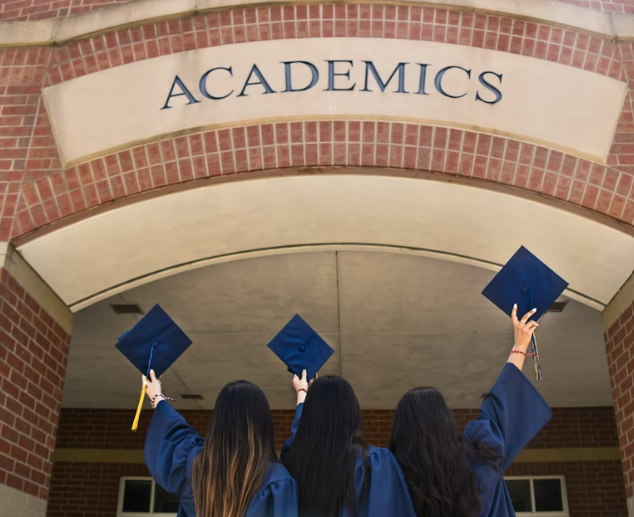
Graduating + Study Abroad experience adds economic value
Quantifying the Global Classroom: An Interview with Prof. George Monray
BANGKOK, THAILAND, November 15, 2026 /EINPresswire.com/ -- Quantifying the Global Classroom: An Interview with George Monray
Interviewer: In your paper, “The Economic Value of Study Abroad: Human Capital Development, Graduate Earnings, and the Added Value of International Academic Experience,” you take an explicitly financial approach to international education. What prompted you to evaluate study abroad using Net Present Value (NPV) modeling?
George Monray: Study abroad has long been celebrated for intangible benefits like cultural immersion and personal adaptability. However, viewing it primarily as an informal or supplementary lifestyle experience has created an academic vulnerability. Because programs rarely confer a standalone degree and are often managed by independent partner providers, observers sometimes regard them as peripheral to a university education.
My objective was to demonstrate that study abroad produces measurable economic value for students, universities, and U.S. society. By applying Net Present Value (NPV) modeling—operationalizing the time value of money across career income trajectories—we can quantify long-term human capital formation in rigorous financial terms.
Interviewer: A central element of your framework is the “dual-value proposition” of study abroad. How do you break down this economic value?
George Monray: We isolate the total return into two distinct channels:
1. Direct Contribution to Degree Completion: A typical semester abroad delivers accredited coursework that counts toward a student’s bachelor’s degree.
2. Specific Study Abroad Premium: This captures the incremental labor-market value—such as cross-cultural competence, independence, and global communication—that employers actively reward with higher earnings.
To measure the first stream, we compare the lifetime earnings of bachelor's degree holders against workers without a degree. Using national salary trajectories from Payscale discounted at 4.00% over a 40-year career, a high school graduate’s lifetime NPV is $1,018,753.46, while a college graduate’s lifetime NPV reaches $1,854,459.20 after accounting for an initial $120,000 educational investment.
This creates an $826,306 lifetime earnings differential. Because a standard semester abroad delivers 5 accredited courses (15 credits)—exactly 12.5% of the standard 120 credits required to graduate—we attribute 12.5% of that degree differential directly to the semester abroad. This yields $103,288 in human capital value per student.
Interviewer: In your case study, you evaluate an educational provider operating in Barcelona. What does this mean when scaled across their cohort?
George Monray: Our case study analyzes a provider in Barcelona that serves an annual cohort of 1,500 American students—800 in the spring, 300 in the summer, and 400 in the fall.
Multiplying the proportional value of $103,288 by 1,500 students demonstrates that credit progression alone returns $154,932,000 annually to the United States economy.
Interviewer: What about the second channel—the specific earnings premium? Where does that data originate?
George Monray: Isolating the distinct labor-market impact of study abroad has historically been difficult. However, a benchmark study by The Forum on Education Abroad (September 2025) examined nearly 8,000 undergraduate business majors across four U.S. universities graduating between 2021 and 2025.
They found that graduates who studied abroad secured a 6.3% higher starting salary than non-participating peers, adding approximately $4,159 to entry-level pay. In our model, this raises baseline entry earnings from $56,754 to $60,329.
To remain conservative against career uncertainties, we discounted that annualized premium over a compressed 30-year horizon at a 4.00% discount rate. This generates a net present value of $71,917.57 per graduate. Across our 1,500-student cohort, this adds another $107,876,355 in economic value.
Combining both vectors—the $154.93 million from degree completion and the $107.88 million from the earnings premium—the single institution in Barcelona generates $262.81 million (roughly $263 million) in annual societal value for the U.S. economy.
Interviewer: Your paper draws an interesting connection to the history of agricultural and applied economics (AAE) and the recent work by Adjemian et al. (2024). Why include that literature?
George Monray: Applied economics departments faced similar challenges in justifying their institutional value. Adjemian et al. (2024) conducted a comprehensive evaluation of U.S. AAE departments, finding they contribute $2.6 billion annually to GDP. Crucially, between $2.2 billion and $2.3 billion of that total stemmed directly from teaching and human capital creation, rather than research grants or physical extension. Their findings confirm that human capital development is the primary economic engine of higher education. We applied that exact principle to study abroad.
Interviewer: What limitations and methodological caveats do you emphasize regarding these figures?
George Monray: We must be transparent: the 2025 Forum on Education Abroad study evaluated business majors from four institutions, so its 6.3% premium must be viewed as an indicative finding rather than a universal law.
Furthermore, as Giorgio Di Pietro’s 2022 meta-analysis of 166 estimates in the Journal of Economic Surveys cautioned, findings can vary widely and reflect publication bias. An observed premium does not definitively prove causation. Students who study abroad may already possess greater motivation, higher socioeconomic status, stronger baseline language skills, or better professional networks. Future research with longitudinal datasets is essential to isolate self-selection from program effects.
Interviewer: What is the predominant takeaway you hope university leaders and policymakers draw from this work?
George Monray: Study abroad should not be treated as an academic luxury or an optional sideline. When students complete 12.5% of their undergraduate degree overseas and acquire intercultural skills valued by employers, international mobility functions as a high-yield human capital investment. A single program generating over $262 million in annual value proves that international education is an integral component of student development and long-term economic wealth.
George Monray
GM
Visit us on social media:
LinkedIn
Legal Disclaimer:
EIN Presswire provides this news content "as is" without warranty of any kind. We do not accept any responsibility or liability for the accuracy, content, images, videos, licenses, completeness, legality, or reliability of the information contained in this article. If you have any complaints or copyright issues related to this article, kindly contact the author above.
